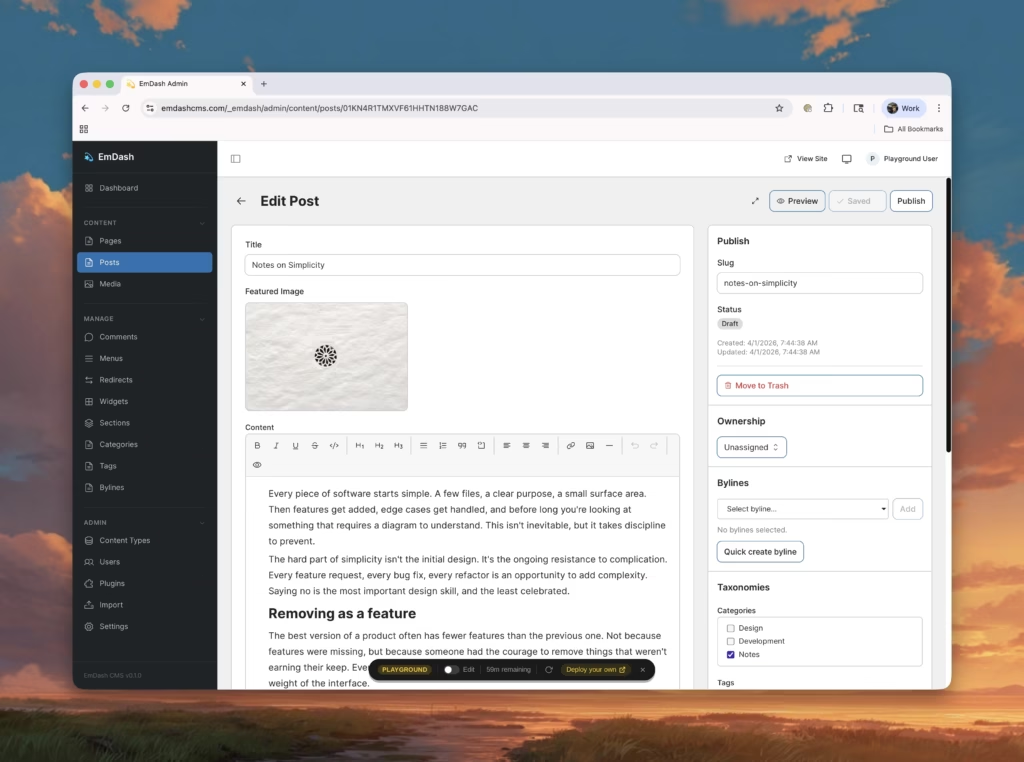
After spending a week experimenting with Cloudflare’s EmDash CMS, here’s where I’ve landed: this feels like the version of WordPress many of us were hoping for about eight years ago—before Gutenberg entered the picture.
EmDash brings some genuinely solid ideas to the table, especially around sandboxing plugins and limiting arbitrary code execution. The interface is clean, polished, and thoughtfully designed—it has that familiar WordPress feel, just more refined. At the same time, it’s hard not to feel like this kind of innovation arrived a bit late. If something like this had launched alongside WordPress 5, there’s a real argument that WordPress might have been joined platforms like Drupal or ExpressionEngine on the “legacy” shelf.
The Block Editor still ranks among the most controversial shifts in WordPress history, but EmDash doesn’t offer much in the way of editing either other than a slightly better classic editing experience. That said, the landscape has already shifted. Tools like Elementor, Visual Composer, and even the Block Editor have fundamentally changed how people approach CMS-driven development. EmDash, by contrast, skips visual editing entirely and leans on a more traditional TinyMCE-style experience. For some, that’s refreshing—but it also brings back old frustrations. Formatting quirks persist, and that all-too-familiar moment where bolding a headline unexpectedly affects an entire paragraph is still very much alive.
There are also ecosystem gaps. While plugin sandboxing is a smart approach, compatibility with major players like WooCommerce, Yoast, Gravity Forms, and Contact Form 7 just isn’t there yet—not even close. And framing plugins broadly as a “security crisis” feels a bit overstated. Plugins can absolutely introduce risk, but they’re also a core part of what makes platforms like WordPress so powerful when used responsibly.
From a technical standpoint, EmDash feels like a well-executed AI-driven concept—something that could scale nicely—but it raises questions about who it’s really for. The simplicity of spinning up a WordPress site is gone, replaced by a setup that depends on Cloudflare infrastructure or a Node.js environment. That alone shrinks the potential user base dramatically—from the massive portion of the web that can run WordPress to a much smaller, more technically inclined audience.
In short: impressive, thoughtful, and full of potential—but also late to the party and facing an uphill climb.