Tone down the hype.
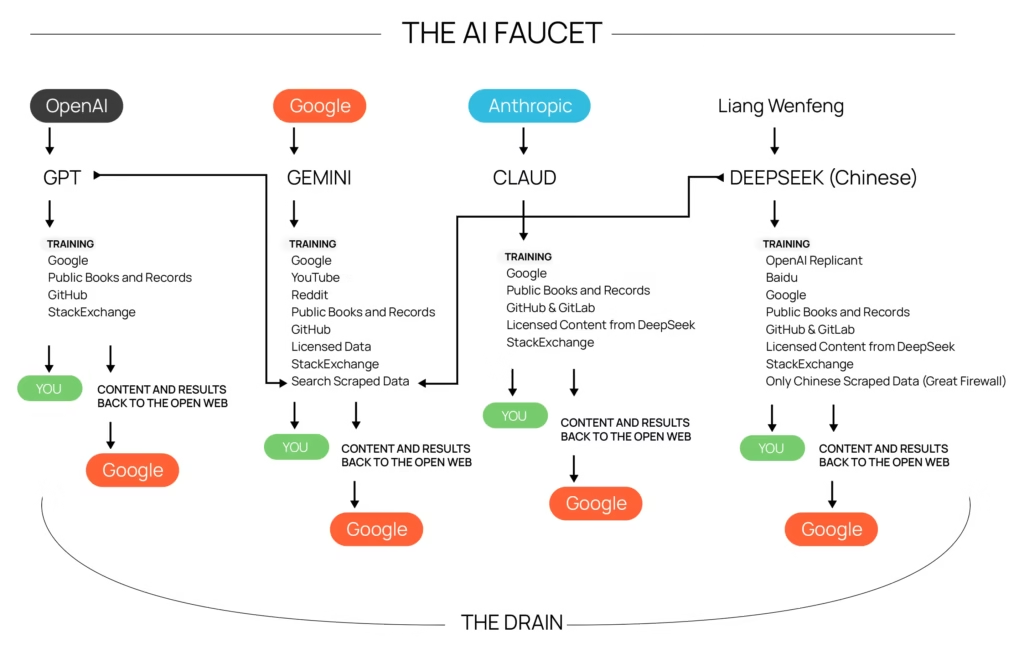
Despite what “experts” claim, no AI platform can touch Google’s LLM development. Google owns the world’s largest data funnel: its search engine. While others scrape public data, Google processes billions of daily user queries and behaviors. They capture the entire lifecycle of information, from the initial user question to the final destination where AI content (even 3rd-party) is hosted, like YouTube or Search Console-linked sites.
That being said, Google’s new AI search bar is the biggest overhaul to its interface in 25 years. This shift is a direct counter to the rise of rival AI platforms like Claude and ChatGPT, which have become go-to spots for product and service inquiries. While competitors still struggle with “hallucinations,” they are improving rapidly.
Despite platforms like ChatGPT and Clauds growth, 71% of users on these platforms still verify data responses in Google to fact check with a “trust but verify” approach. A trust problem that Google doesn’t have.
Google’s response.
Powered by Gemini 3.5, Google AI-Powered search mirrors many of ChatGPT and Claud’s features—saving history in “Threads” and generating text, images, and code—but with one massive advantage: it pulls data directly from the “Google Mothership” rather than just scraping the surface of the web like other AI platforms.
Food for thought.
Because Google controls so much of the web ecosystem through APIs, cloud services, Android, Workspace, Search, and advertising infrastructure, competing AI platforms often struggle to match Google’s level of access to real-world generative content distribution and integration.